
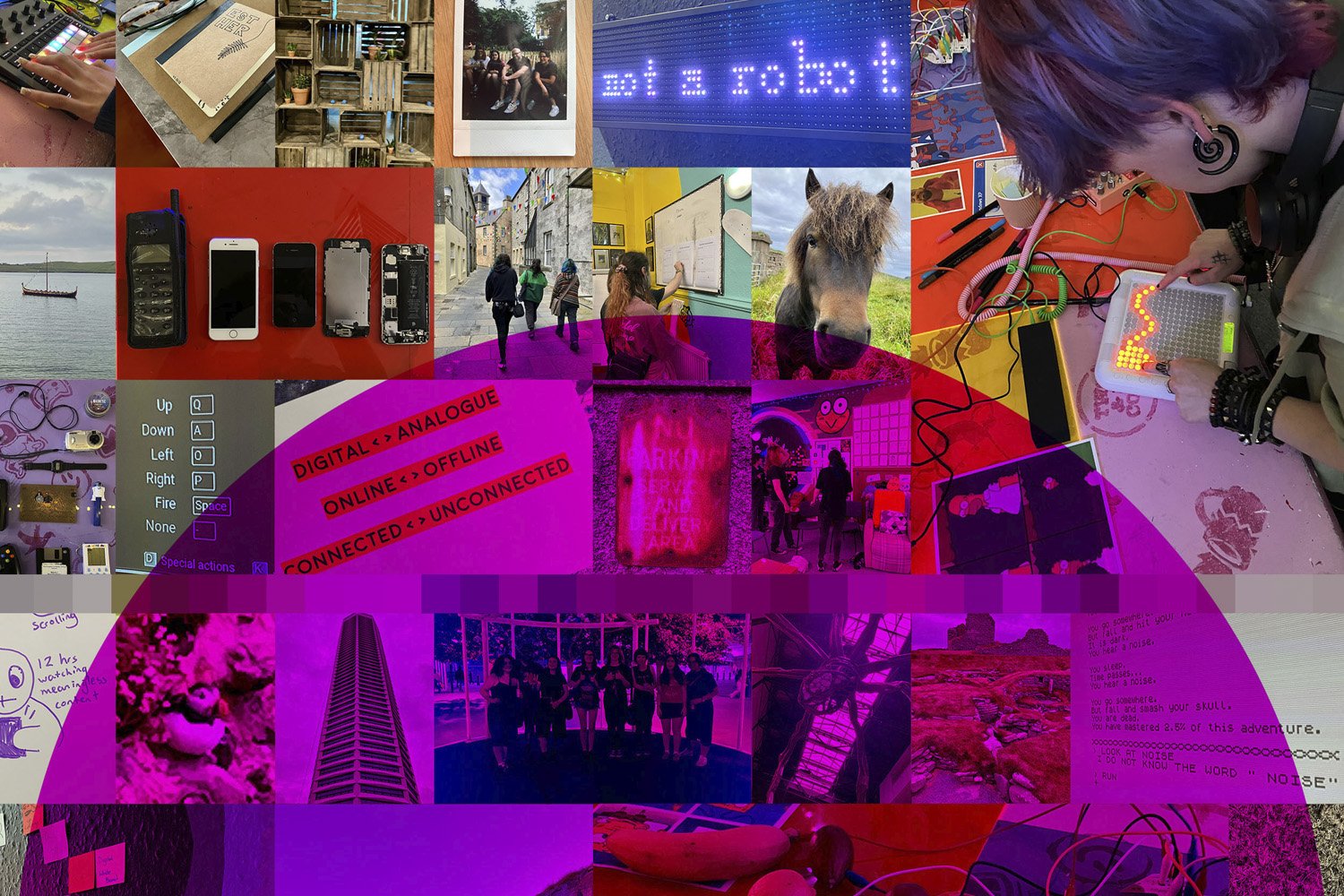
Young Digital Lives
“AI will never replace me. I’m too magical.” Participant
The project.
In 2025, Social Research Reimagined and Hot Chocolate Trust worked with the Ada Lovelace Institute on research to understand young people’s digital lives.
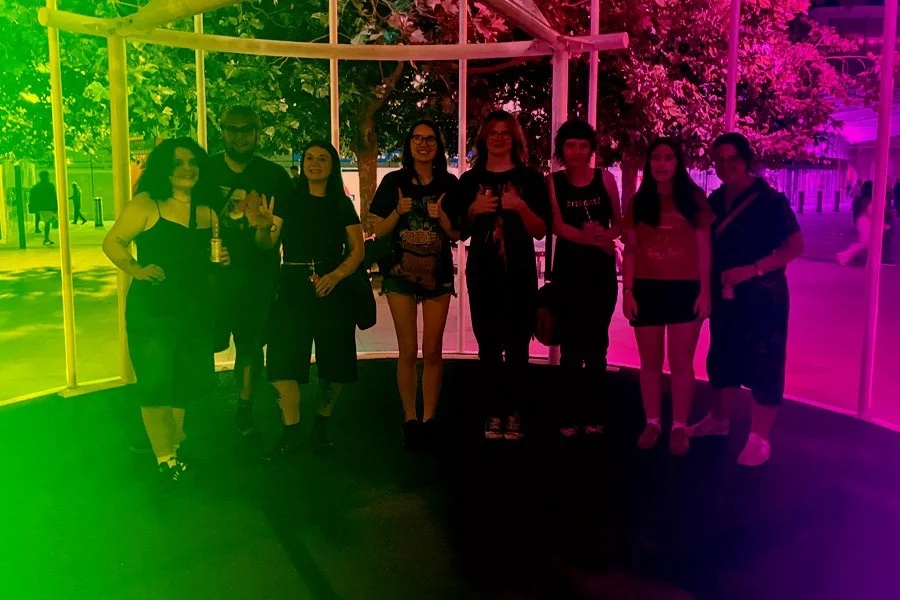
A small group of digitally native* young people from Dundee came together to be trained as peer researchers - exploring their own experience, co-designing research fieldwork and travelling the country gathering data, before coming home to co-analyse and make sense of what they found.
*Those born immersed into a world of digital technology and interacting from a young age with digital tools such as the internet, smart phones and computers.
The findings.
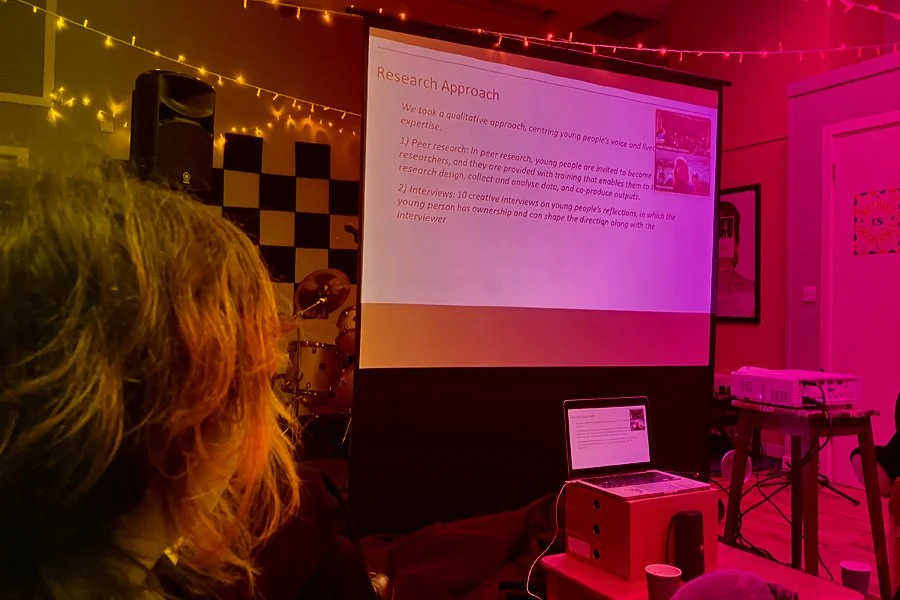
It’s here! Follow the link below to read the full report - ‘I love it but I hate it - young people’s experience and expectations of growing up digital ’, which is packed full of important insights and policy implications, rooted in the lived experiences of young people from across the country:
Enjoy!
The experience.
The peer researchers reconnected in the autumn to create a visual snapshot of the many sights, sounds, thoughts and emotions they experienced during the whirlwind process of exploration, adventure and discovery as digital peer researchers.
This took the form of HAPPY HAPPY DOOM SCROLL: a beautiful zine full of photos, art, and words and is available to download here. We hope you enjoy!
The process.
MAY: Pre-Research Engagement >>>
Youth worker -led digital taster sessions, introduced the project in open drop-in sessions, using everything from retro technologies, to electronic music to video games and CCTV.
These sessions explored broad thoughts and diverse opinions and generated rich conversations from which to gauge interest and recruit the peer researchers.
JUNE: Training/Co-Design >>>
Peer researchers met weekly to explore their own experiences together, learn research skills, narrow down their research interests and co-create a workshop model for gathering data effectively and creatively.
JULY: Fieldwork >>>
Young people piloted the workshop in Dundee, and used feedback and reflection to further develop it. They then worked in teams to connect and deliver the workshop with three amazing youth work partners –
Just Youth in Sandwell (https://www.justyouth.org.uk),
Marys Youth Club in Islington (https://www.marys.org.uk), and
Open Shetland in Lerwick (https://www.openshetland.co.uk)
- gathering diverse views and experiences from young people from very different contexts.
AUG: Co-Analysis >>>
The peer researchers returned to spend the last few sessions analysing the data – making sense and drawing out key themes and differences, before handing it all over to Ada Lovelace Institute to write up the report.
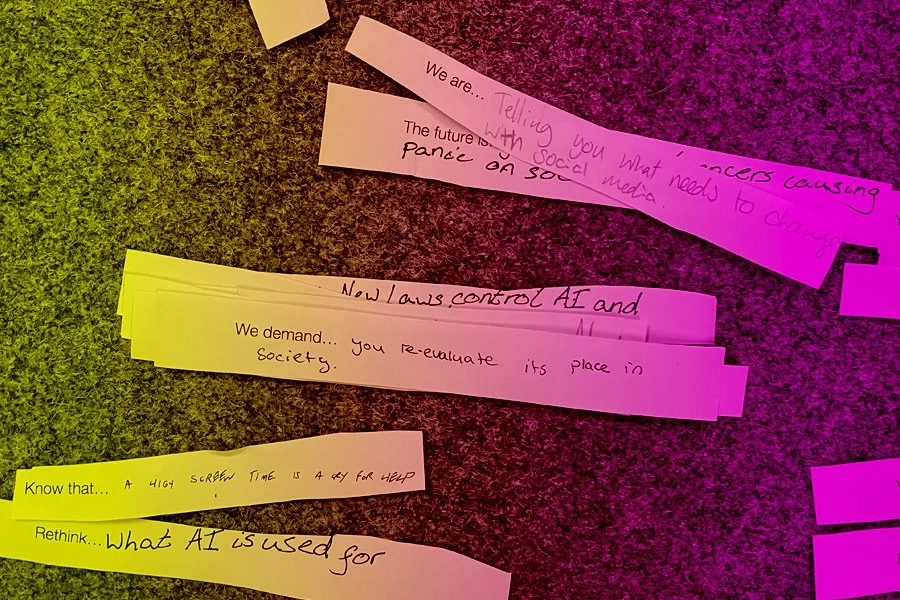
Each youth work partner also facilitated creative follow up sessions with their participants, using manifestos as a tool to help them identify priorities for their local context, and ensuring their voices were clearly heard as we collated the data.